
From ₹3.30 to ₹95+: The Untold Truth Behind the Falling Rupee
IRAN ISRAEL WARRUPEEDOLLAR
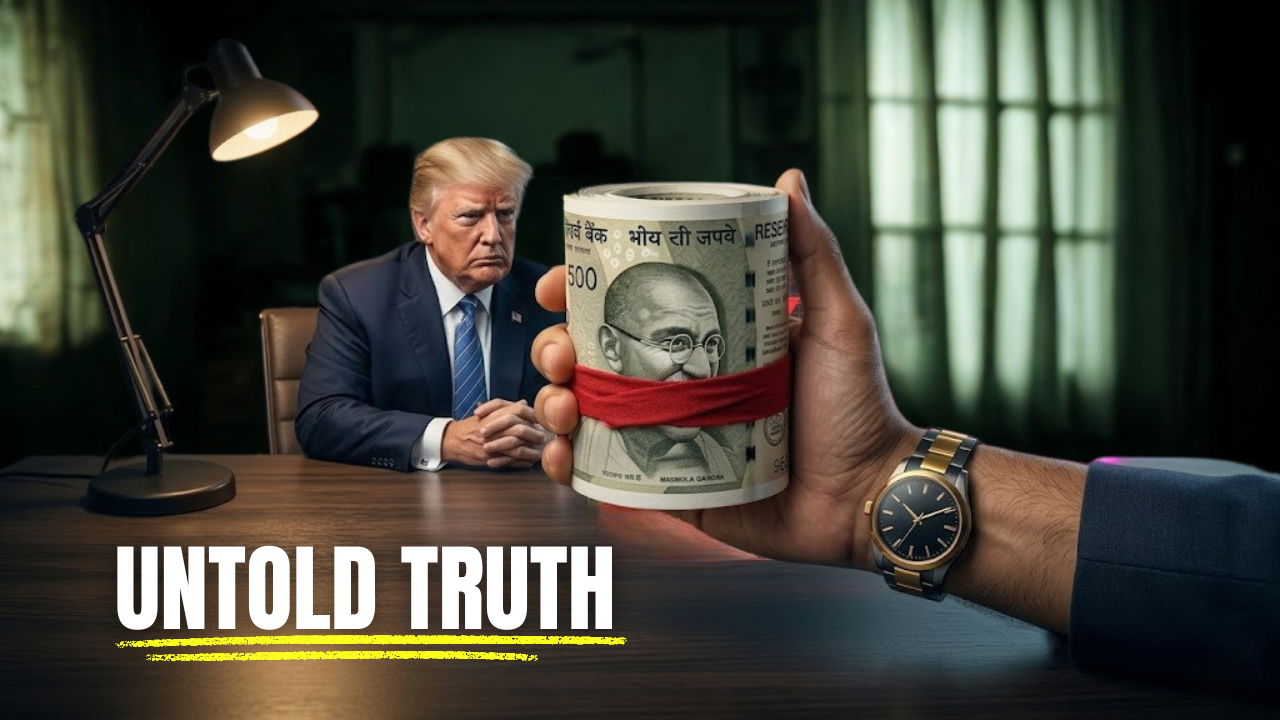
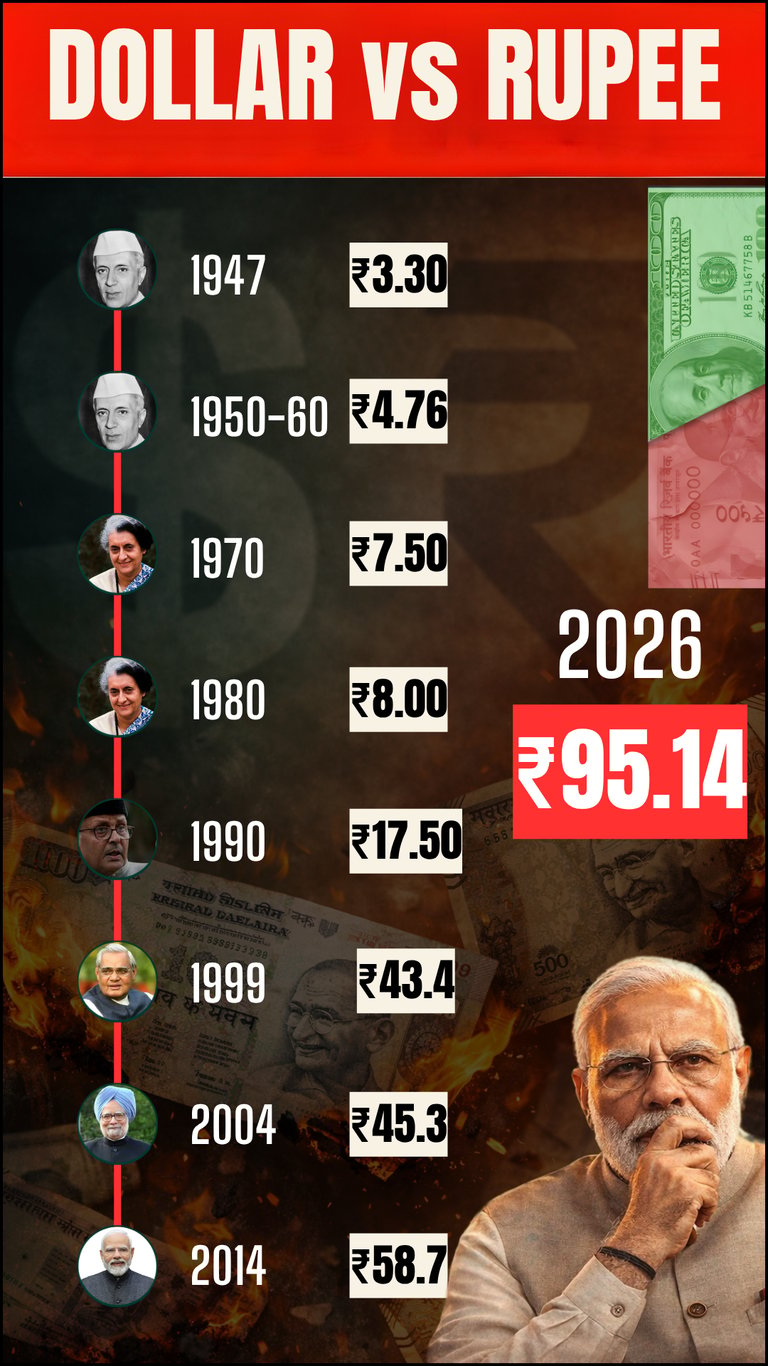
Today, the Indian Rupee touched a historic low of ₹95.14 against the US Dollar. For many, this number triggers concern, even fear. It raises an obvious question: how did a currency that was once valued at ₹3.30 per dollar in 1947 fall to beyond ₹95 in 2026? At first glance, it appears to signal economic weakness. But the reality is far more nuanced, and far more interesting.
The movement of a currency is not a simple reflection of a country’s strength or weakness. Instead, it is shaped by a complex interplay of global forces—trade dynamics, inflation, capital flows, geopolitical tensions, and the structure of the international financial system itself. To truly understand the rupee’s journey, one must look beyond the surface and question a widely held assumption:
Does a falling currency really mean a failing nation?
The answer is not as straightforward as it seems.
One of the most important factors in this discussion is the unique position of the US Dollar in the global economy. The dollar is not just another currency; it is the world’s primary reserve currency. International trade—especially critical commodities like crude oil—is largely conducted in dollars. Central banks across the world hold significant portions of their reserves in USD, and during times of uncertainty, investors instinctively move their capital into dollar-denominated assets. This creates a constant underlying demand for the dollar, which naturally strengthens it over time.
As a result, even when countries like India are growing rapidly, their currencies can still weaken relative to the dollar simply because the global system is designed to favour it. This is not necessarily a reflection of India’s decline, but rather a consequence of how global finance operates.
Another silent but powerful force behind currency depreciation is inflation. Over the decades, inflation has gradually reduced the purchasing power of money. If India experiences higher inflation compared to the United States, the value of the rupee declines in relative terms. What ₹100 could buy years ago is no longer the same today, and this difference accumulates over time. Currency depreciation, in many ways, is simply inflation expressing itself on a global scale.
India’s economic structure also plays a crucial role. As a developing nation with a growing population and expanding industrial base, India relies heavily on imports—particularly crude oil, electronics, machinery, and gold. These imports are paid for in US Dollars. When India imports more, it needs more dollars, which increases the demand for USD in the foreign exchange market. This higher demand naturally puts downward pressure on the rupee.
⚔️ The Iran–Israel–USA Conflict: A Hidden Driver Behind the Rupee Fall
Right now, the world is witnessing a major geopolitical escalation in the Middle East involving Iran, Israel, and the United States.
This is not just a regional conflict. It is directly impacting:
Global oil supply
Trade routes
Inflation
Currency markets
The Strait of Hormuz — through which nearly 20% of the world’s oil supply passes — has been severely disrupted due to the conflict.
As tensions escalated, oil prices surged dramatically, crossing $100 per barrel and rising over 50% in a short period.
This single development has massive consequences for India.
Among these imports, crude oil stands out as one of the most significant drivers. Since India imports a large portion of its energy needs, any increase in global oil prices directly increases the demand for dollars. This creates a ripple effect across the economy, influencing everything from fuel prices to inflation and, ultimately, the value of the rupee.
Closely linked to this is the concept of the trade deficit. India consistently imports more than it exports, which means more dollars are leaving the country than coming in. To bridge this gap, India relies on foreign investment, such as Foreign Institutional Investment (FII) and Foreign Direct Investment (FDI). However, these flows are highly sensitive to global conditions. If international investors withdraw their money due to risk or uncertainty, the outflow of capital can cause the rupee to weaken sharply.
Global events further amplify these movements. Wars, geopolitical tensions, and economic crises tend to create fear in financial markets. In such times, investors seek safety, and the US Dollar is widely considered the safest asset. This leads to a surge in demand for dollars, strengthening it further while putting pressure on emerging market currencies like the rupee. Importantly, this can happen even when India’s domestic economy remains stable.
In this entire process, the role of the Reserve Bank of India (RBI) is often misunderstood. The RBI does not control the value of the rupee in an absolute sense. Instead, it manages volatility and ensures that movements are orderly rather than abrupt. It intervenes by buying or selling dollars from its reserves, adjusting interest rates, and controlling liquidity in the system. However, it cannot override global market forces, oil prices, or the structural dominance of the dollar. Its role is to stabilise, not to fix.
At this point, it is essential to address another misconception—that a falling rupee is entirely negative. In reality, currency depreciation has both costs and benefits. While it makes imports more expensive and contributes to inflation, it also enhances the competitiveness of Indian exports. Sectors such as information technology, pharmaceuticals, and manufacturing benefit significantly because they earn in dollars. When the rupee weakens, their dollar revenues translate into higher earnings in rupee terms.
Similarly, the tourism sector can gain from a weaker currency, as India becomes a more affordable destination for foreign travellers. On the other hand, industries heavily dependent on imports, such as aviation, face increased costs. Consumers also feel the impact through rising prices, and students studying abroad bear a higher financial burden.
Therefore, the story of the rupee is not one of simple decline. It is a story of adjustment within a global system where the US Dollar occupies a central position. The shift from ₹3.30 to ₹95+ over decades reflects inflation differentials, evolving trade patterns, capital flows, and the realities of a dollar-dominated world.
What is often overlooked is that during this same period, India has transformed dramatically. It has emerged as one of the fastest-growing major economies, built a strong digital and services ecosystem, and established itself as a key player in global markets. The weakening of the rupee has occurred alongside this growth, not despite it.
The real takeaway is this: a currency is not a scoreboard of national success. It is a dynamic indicator influenced by global economics, policy decisions, and market sentiment. Instead of reacting to the number ₹95 with fear, one should seek to understand the forces behind it.
To Summarise:
The rupee hasn’t just “fallen” —
👉 It has adjusted to a system dominated by the US Dollar
From ₹3.30 to ₹95+, the story is not weak.
It’s a reflection of:
Inflation differences over decades
India’s growth journey
Global dollar dominance
Structural trade patterns
🔥 Final Perspective
Don’t look at ₹95 and panic.
Instead, understand this:
👉 A currency is not a scoreboard of national success
👉 It is a reflection of global economics in motion
India today is:
One of the fastest-growing economies
A major global player
A rising manufacturing and digital hub
Yet, the rupee falls.
Why?
Because in the global system:
👉 The dollar sits at the centre — and everything else moves around it
⚡ The Real Question You Should Ask
It's Not: “Why is the rupee falling?”
But:
👉 “How can I position myself to benefit from these movements?”
Because smart investors don’t fear currency shifts.
They understand and use them.
Because ultimately, those who understand currency movements do not merely observe them—they position themselves to benefit from them.
This is not just about the rupee. This is about understanding how money, power, and global economics truly work.