
Iran vs Israel Just Escalated… And the Whole World Could Pay the Price
IRAN ISRAEL WARFEATURED
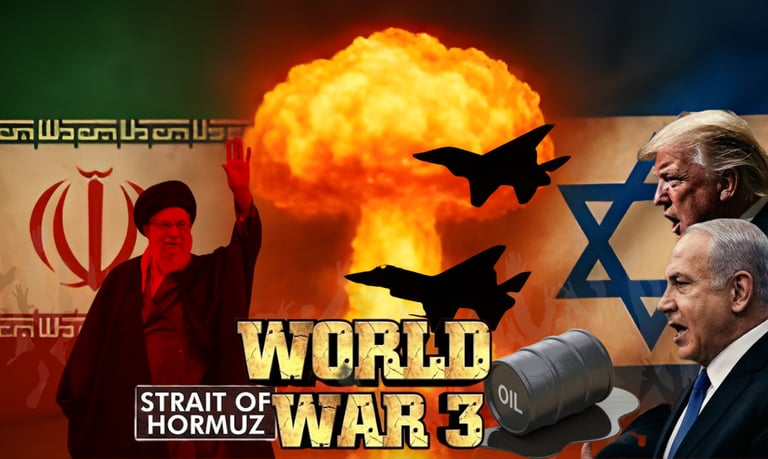
What started as a military strike between Iran and Israel could trigger something much bigger. Can Iran actually close the Strait of Hormuz? What happens if Iran’s central government weakens? And why is Trump so desperately behind Iran?
The answer is more complicated than most people think.
Right now, the Middle East is entering one of the most dangerous geopolitical moments in decades.
Tensions between Iran, Israel, and the United States have escalated dramatically after coordinated strikes targeted several Iranian military and nuclear-related sites, including locations near Tehran. These strikes were aimed at weakening Iran’s military infrastructure and limiting its missile and nuclear capabilities. Iran responded almost immediately. Missiles and drones were launched toward Israeli targets and toward U.S. military bases across the region. Suddenly, countries that were not directly involved in the conflict—including Bahrain, Qatar, Kuwait, and the United Arab Emirates—found themselves caught in the crossfire. But the bigger concern is not just what is happening right now. The real question is what happens next. If Iran’s central government weakens significantly, the consequences could spread far beyond its borders. For decades, Iran has built a powerful network of regional alliances and proxy groups. In Iraq, several influential militia groups operate with strong ties to Tehran. In Lebanon, Hezbollah remains one of the most heavily armed non-state actors in the world. Across the Gulf region, governments are preparing for the possibility that the conflict could spread into multiple countries simultaneously. If Iran’s leadership becomes destabilized, these networks could act independently, turning what is currently a regional confrontation into a much wider Middle Eastern conflict.
At the same time, another strategic doctrine appears to be returning. Many analysts believe the United States is reviving what is known as the “maximum pressure” strategy. First introduced during the Trump administration, this approach combines economic sanctions, political pressure, and military force to weaken Iran from within. The objective is not only to limit Iran’s military capabilities but also to generate internal pressure that could challenge the current leadership. In simple terms, it is a strategy designed to push Iran toward major political change.
Two key objectives sit at the centre of this strategy.
The first is to severely weaken or potentially replace Iran’s current leadership.
The second is eliminating Iran’s nuclear and long-range missile capabilities, which Israel and the United States consider one of the biggest security threats in the region.
But this conflict is not only being fought with missiles and air strikes. There is another battlefield that could affect the entire world. The economic battlefield. Iran has begun responding not only militarily but also economically. One of its most powerful tools is the ability to disrupt global shipping routes in the Persian Gulf. And that brings us to one of the most important questions being asked right now: Can Iran actually close the Strait of Hormuz? Technically, no country owns the Strait of Hormuz. It is an international waterway that connects the Persian Gulf to the open ocean, and ships from all over the world pass through it legally every day. However, the reality is more complicated. Even if the waterway remains legally open, ships still require war-risk insurance to travel through conflict zones. As tensions in the region rise and missile and drone attacks become more likely, many maritime insurers are already reconsidering or withdrawing coverage. Without insurance, shipping companies simply cannot send vessels through the strait. So even if Iran does not physically block the passage with naval mines or military ships, the route could effectively shut down on its own—because no company wants to risk losing billion-dollar oil tankers in an active conflict zone. And that is why this situation matters so much. The Strait of Hormuz is one of the most critical energy chokepoints in the world. Roughly 20 per cent of global oil consumption—around 17 to 21 million barrels per day—passes through this narrow corridor. At the same time, about 20 percent of the world’s liquefied natural gas supply, much of it exported from Qatar, also travels through this route. One corridor. No meaningful alternative route.
If shipping through this corridor becomes unsafe, the entire global energy system feels the impact. And the countries most dependent on this route are primarily in Asia. China imports a large portion of its crude oil through the Strait of Hormuz. Japan relies on it for nearly 75 percent of its oil imports, while South Korea depends on it for around 60 percent of its energy supply. Europe has also increased its reliance on liquefied natural gas from Qatar after reducing dependence on Russian gas following the Ukraine crisis.
In other words, this single waterway connects the energy supply of multiple major economies. That is why even the threat of disruption sends oil markets into panic. Following the recent escalation in the Iran-Israel conflict, oil prices immediately jumped as traders began pricing in the possibility that shipping through the Gulf could be disrupted.
Analysts warn that if the Strait of Hormuz remains unstable for an extended period, global energy prices could surge sharply. But the consequences would go far beyond fuel prices. This corridor is also crucial for global trade in other commodities. A large portion of fertilizer shipments passes through Gulf shipping routes. If the strait becomes unsafe, transportation costs increase, fertilizer supplies tighten, agricultural production becomes more expensive, and eventually food prices rise. Higher oil prices also increase transportation costs across almost every industry—from shipping and aviation to manufacturing and logistics.
And that creates a ripple effect across the global economy.
Higher energy prices push inflation higher.
Higher inflation forces central banks to keep interest rates elevated.
And high interest rates make it harder for financial markets—especially risk assets like stocks and cryptocurrencies—to rally.
So this conflict is not just a geopolitical story unfolding thousands of kilometres away. It can eventually affect everyday life. The price of fuel at the pump. The cost of groceries in your shopping basket. Interest rates on loans. And even the performance of global markets. For India specifically, the situation is somewhat nuanced.
Reports indicate that Iranian authorities have not been targeting Indian vessels passing through the region, and India maintains diplomatic relationships with several countries involved in the conflict. However, India is still deeply connected to global energy markets. If global oil prices surge, India—one of the world’s largest energy importers—will inevitably feel the impact through higher fuel prices and rising inflation. That means the economic consequences of this conflict could eventually reach Indian households through higher transportation costs, increased prices of goods, and broader pressure on the economy.
And that is why the world is watching this situation so closely. Because this is no longer just a regional dispute between Iran and Israel. It has become a complex geopolitical struggle involving military power, economic pressure, energy security, and the future balance of power in the Middle East. What happens in the coming weeks will determine whether this crisis stabilises—or whether it expands into a much larger regional conflict. And in today’s interconnected world, when major powers collide in a region as critical as the Middle East, the consequences rarely remain contained.
They ripple outward—through global markets, through energy supply, and eventually into the everyday lives of people across the world.