
The ₹1 Crore Journey: Your Roadmap to True Financial Independence in India
FEATUREDFINANCEMONEY MANAGEMENT
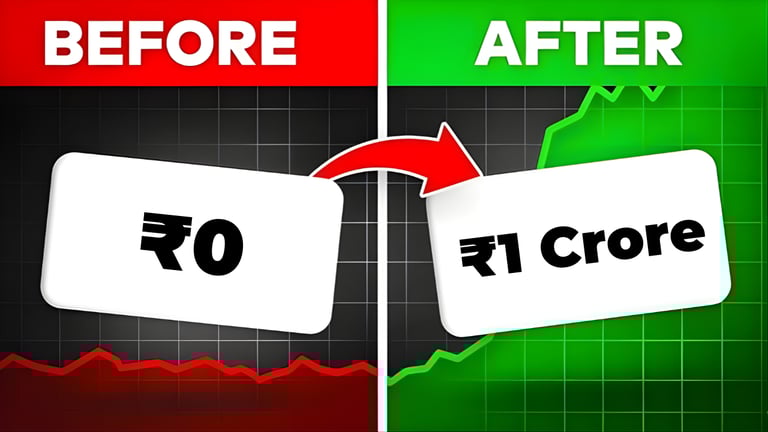
Building ₹1 crore in India isn’t just a milestone — it’s your ticket to true financial independence. Once you cross this threshold, everything about your financial life changes.
Yet, the harsh reality is that less than 30 lakh people in India — out of a population of 140 crore — have reached this level of wealth. That’s barely 0.2% of the population.
But there’s good news. By 2030, India is expected to have over 1 crore crorepatis. The question is — will you be one of them?
💡 Why ₹1 Crore Matters So Much
Let’s start with the why.
Once you have ₹1 crore invested, your money begins to work harder than most people do for their salary. Think about it — ₹1 crore invested wisely can easily generate ₹1 lakh per month in passive income.
That means you’ve essentially created another version of yourself — one who earns money 24/7 without needing to work.
Most people, however, fall into a trap — exchanging their time for money just to pay for liabilities like home loans and car EMIs. They get stuck in this never-ending financial treadmill.
But once your savings reach ₹1 crore, the passive income it generates can cover 60–70% of your monthly EMIs. And that’s where your financial freedom journey truly begins.
🧠 The Biggest Myth Keeping Indians Poor
Before we talk about how to become a crorepati, let’s address the biggest myth that keeps even educated Indians broke.
Many believe:
“If I just switch my job from TCS to Google and start earning ₹50 lakh per year, I’ll be rich overnight.”
That’s completely wrong.
The real problem isn’t your salary — it’s lifestyle inflation.
🏙️ The Lifestyle Trap
As soon as your salary increases, society “upgrades” your expected lifestyle.
You move from paying ₹20K rent in Whitefield to ₹70K in Indiranagar.
You upgrade from a Honda Activa to a BMW.
You stop cooking at home and start ordering from Swiggy every day.
Before you realize it, your salary hike disappears into higher living costs.
You definitely need a minimum income to start investing — but your savings rate matters far more than your CTC package.
Even engineers earning ₹30 lakh per annum can have lower savings than government employees earning ₹12 lakh. The difference lies in discipline, not income.
🎓 What Schools Never Taught Us
Our parents had half the formula right —
“Study hard, get into a good college, get a high-paying job.”
But what schools and colleges never taught us is what to do after the salary hits your account.
Even a ₹50 lakh package won’t make you rich unless you know how to manage, save, and invest your money smartly.
📊 The Minimum Salary You Need to Become a Crorepati
Let’s break this down with a realistic plan.
Assume you:
Save 30% of your post-tax income, and
Increase your savings by 10% every year, through promotions or job switches.
You’ll need to earn at least ₹12 lakh per annum (post-tax) and generate 12% annual returns on your investments to reach ₹1 crore in 10 years.
And the best part?
Post the 2025 Union Budget, you don’t pay any income tax on that ₹12 lakh post-tax amount.
🧾 What About Taxes on Your ₹1 Crore?
You only pay taxes when you sell your investments.
So, if you’re investing for financial freedom — not spending — there’s no tax liability until you withdraw.
That’s exactly how billionaires operate.
Elon Musk doesn’t sell his shares to buy yachts — he borrows against his assets.
You can do the same — by taking a loan against mutual funds at just 10–11% interest.
That way, you can access liquidity for big purchases without selling your investments.
📈 How to Earn 12–15% Annual Returns
Now, how do you actually generate 12–15% post-tax returns consistently?
While many mutual funds have delivered 30% CAGR over the last 5 years, that was during a bull run. A realistic expectation going forward would be around 15%, if you’re a passive investor.
Here’s a practical asset allocation you can follow:
Asset ClassAllocationExampleIndian Stocks & Mutual Funds60%Equity mutual funds, index fundsUS Stocks / ETFs10%Nasdaq ETFs, S&P 500Gold / SGBs15%Gold ETFs, Sovereign Gold BondsFixed Deposits / Bonds10%Safe FDs or debt fundsCrypto5%Bitcoin, Ethereum (long-term holding)
💡 Example SIP: ₹30,000/month
₹18,000 → Indian equities
₹3,000 → US stocks
₹4,500 → Gold/SGBs
₹3,000 → FDs or bonds
₹1,500 → Crypto
Follow this disciplined plan for 10 years, and your ₹1 crore goal becomes not just possible — but highly achievable.
⚠️ 3 Traps That Can Derail Your ₹1 Crore Journey
Trap 1: Inadequate Health Insurance
Relying solely on your company’s health policy (worth just ₹5–10 lakh) is a huge risk.
One medical emergency can wipe out years of savings.
Always get independent health coverage worth at least ₹20–25 lakh.
If you lose your job, your corporate policy expires — and you’ll be forced to pay out-of-pocket.
Trap 2: Family Pressure & Emotional Spending
Indian families often spend ₹20 lakh on weddings — on loans!
Or take on ₹1–2 crore home loans immediately after marriage.
Unless you earn ₹40–50 lakh annually, these decisions kill your wealth-building potential.
Focus on financial stability before lifestyle upgrades.
Trap 3: Lifestyle Inflation Beyond 10% Per Year
If your expenses grow faster than your income, you’ll never get rich.
Budgeting is a superpower that most Indians ignore.
The world constantly tempts you with “must-have” gadgets and luxuries — but remember:
“The world will always convince you that you need the new iPhone 17 to be happy.”
True wealth is built by discipline, not display.
🏁 Final Thoughts
Becoming a crorepati in 10 years isn’t about luck, inheritance, or elite degrees.
You don’t need to go to IIT, or have rich parents.
You need a proven system, consistency, and financial discipline
The choice is yours:
Dreamers only talk about becoming rich.
Achievers act on the knowledge they gain — starting today.
So, are you ready to start your ₹1 crore journey? 🚀
✍️ Key Takeaways
Save 30% of your income and grow it by 10% every year
Target 12–15% annual returns through a diversified portfolio
Avoid lifestyle inflation and emotional spending
Secure yourself with adequate insurance
Stay consistent — wealth compounds quietly